Rashi Akanksha | 2nd December 2025
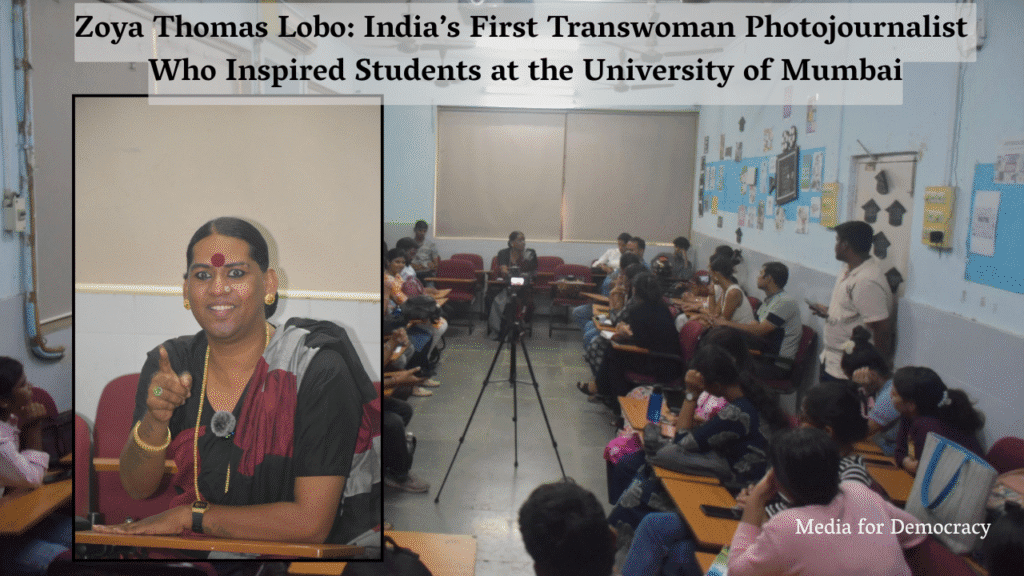
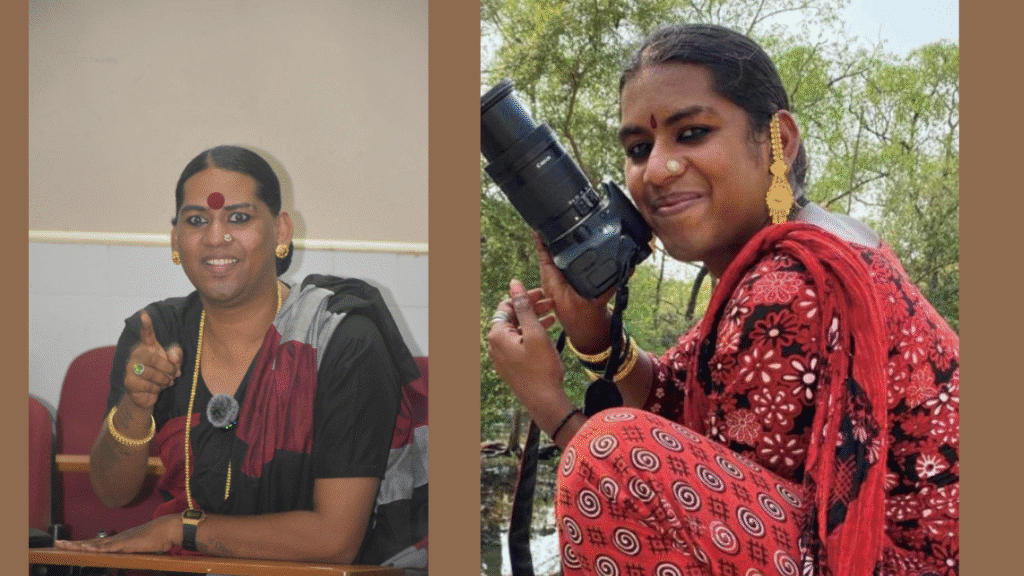
The Department of Communication and Journalism, University of Mumbai, recently had the honour of welcoming Zoya Thomas Lobo – India’s first transwoman photojournalist, as the guest speaker for an eye-opening and deeply moving media session. The room was filled with young aspiring journalists, yet for one afternoon, every student became a witness to a story far more powerful than anything found in textbooks. Zoya didn’t just give a lecture; she enlightened. She didn’t just narrate her journey; she lived it in her words. She represented journalism in its purest, bravest, and most compassionate form rather than merely discussing it. Her presence served as a reminder that the media industry requires more than just talent, it also requires empathy, bravery, and the fortitude to speak one’s truth.
A Story That Began in Silence and Broke Every Barrier
Born and raised in Mumbai, Zoya always knew she was different. The journey began long before she held a camera, long before she even had the language to express her identity. Growing up in a modest household, she carried a truth inside her that she feared revealing. Like many transgender individuals in India, Zoya found herself pushed out of the conventional paths of earning a livelihood. She began traveling in Mumbai’s local trains, seeking alms not as a choice, but as the only space society left open for her. Yet, in those crowded compartments, something else awakened in her: an eye for observation, a sensitivity to human emotions, and a fascination for capturing moments. From the footboard of a train, a photojournalist was quietly taking birth.
From Alms to a Camera: The Beginning of a New Life
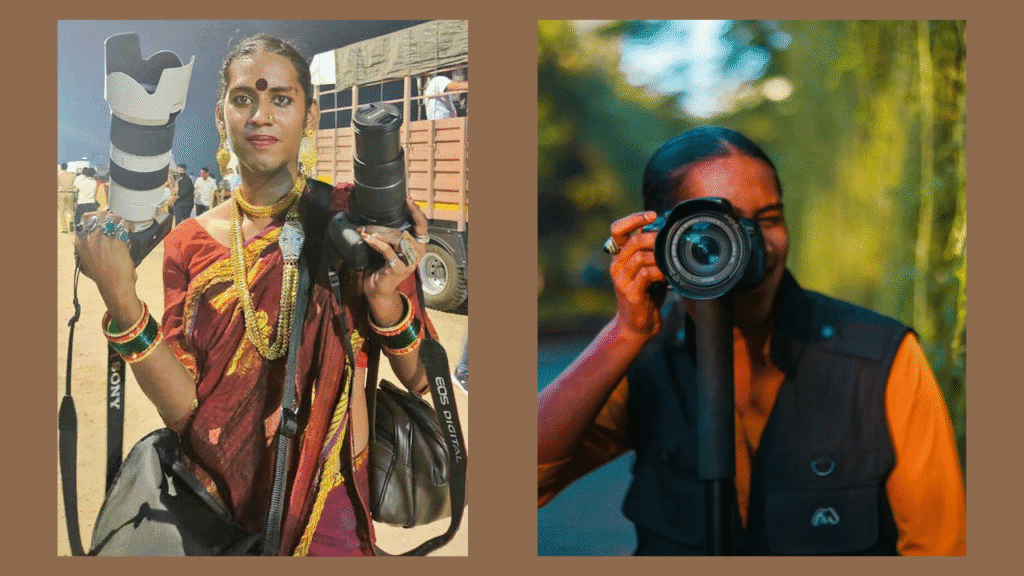
Saving the money she received while begging, Zoya bought her first second-hand camera. It wasn’t the best piece of equipment, but it was enough to transform her life. Then came the COVID-19 lockdown. When the world shut down, local trains halted, and Zoya lost her only means of earning. But while uncertainty loomed, one moment of humanity changed everything for her. One day, as she passed Bandra station, she saw a sea of migrant workers exhausted, stranded, desperate to return home. Without thinking twice, she grabbed her camera and clicked. Those photographs, stirring, painful, real, were picked up by major local and national publications. In that single moment, Zoya stepped into the world she always belonged to: journalism. She didn’t get an immediate full-time job, but she earned something far more valuable – recognition. Her work became her identity. Her lens became her voice.
A Journalist Beyond Label: Reporting with Grit and Grace
Today, Zoya works as a freelance photojournalist, covering major events across Mumbai with the instinct of a storyteller and the heart of someone who has lived through struggle. During the session, she spoke passionately about covering Lalbaugcha Raja, where she was the only transgender journalist present. Despite the teasing, the discrimination, and the comments whispered behind her back, she didn’t bend. She raised her camera. She took her shots. She owned her space. She narrated incidents from lockdown, how she stood amid police, lathi charges, and hostile crowds to get the perfect frame. She spoke about reporting crime, about capturing the tension outside Bandra court, and about the fear that often crept into her bones. Yet she emphasized one lesson above all:
“Police ke paas bandook aur goli hai, par humare paas kalam aur camera hai.”
(The police may have guns and bullets, but we have the pen and the camera.)
The line echoed in the hall long after she said it. For every student sitting there, it became a reminder of why journalism matters, and why journalists must stand tall, even in danger.
More Than a Journalist — A Voice for Her Community
Zoya’s journey is not just professional; it is profoundly personal. She spoke about the power of the NALSA judgment, the slow but growing acceptance of the transgender community, and the need for families to support their children. Her dream is rooted in social change. She wants to show the truth as it is, to be the mirror society often refuses to look into. She wants every transgender individual to have a life of dignity, so they don’t have to stand in trains and beg for survival. “Today, with my parents no longer around, it is my sister’s acceptance of who I truly am that gives me strength and means everything.” said Zoya while talking about her family’s support.
An Inspiration for Every Young Journalist
For the students of the University of Mumbai, Zoya wasn’t just a guest speaker, she was a revelation. She gave them insight into what journalism really demands.
She spoke about trauma, fear, and courage with such honesty that the room fell silent. Each anecdote, whether about discrimination, danger, or determination held a lesson for future storytellers.
Her life is proof that journalism is not only a profession; it is a responsibility.
Why Zoya’s Story Must Be Told
In a world where transgender voices are often silenced, Zoya’s journey stands as a defiant reminder that identity is not a limitation, it is a strength. She broke barriers not just for herself but for an entire community waiting to be seen.
Her story teaches us that brilliance exists everywhere; all it needs is a chance. Every student who dreams of storytelling—every individual who wants to make a difference, has something to learn from her.
Zoya Thomas Lobo is not just India’s first transwoman photojournalist.
She is a symbol of resilience.
A testament to courage.
And a mirror held up to society, urging it to look, learn, and change.
For the students who heard her speak, she left behind more than words – she left a spark.
A spark that says:
Your truth is your power. Your voice matters. And your story can change the world.
Rashi Akanksha is a media researcher and writer focusing on gender, sexuality, and social justice in India. Her work examines the gap between legal rights and lived realities, amplifying the voices of marginalized communities.