Navya Kalesan | 6th December 2025
When we talk about student life, we think of classrooms, lectures, libraries, and friendships. What we rarely talk about are washrooms, until their condition becomes impossible to ignore.
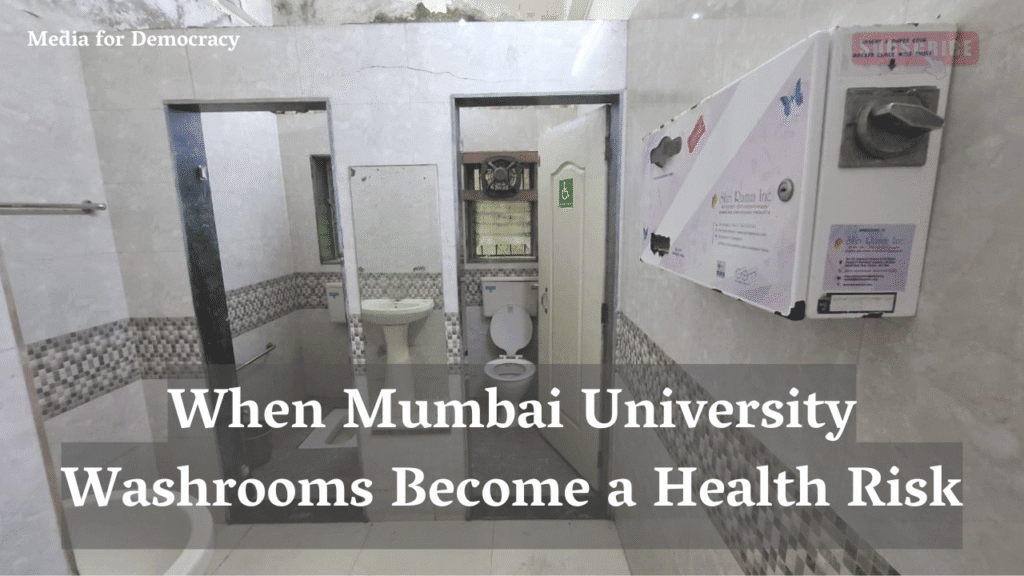
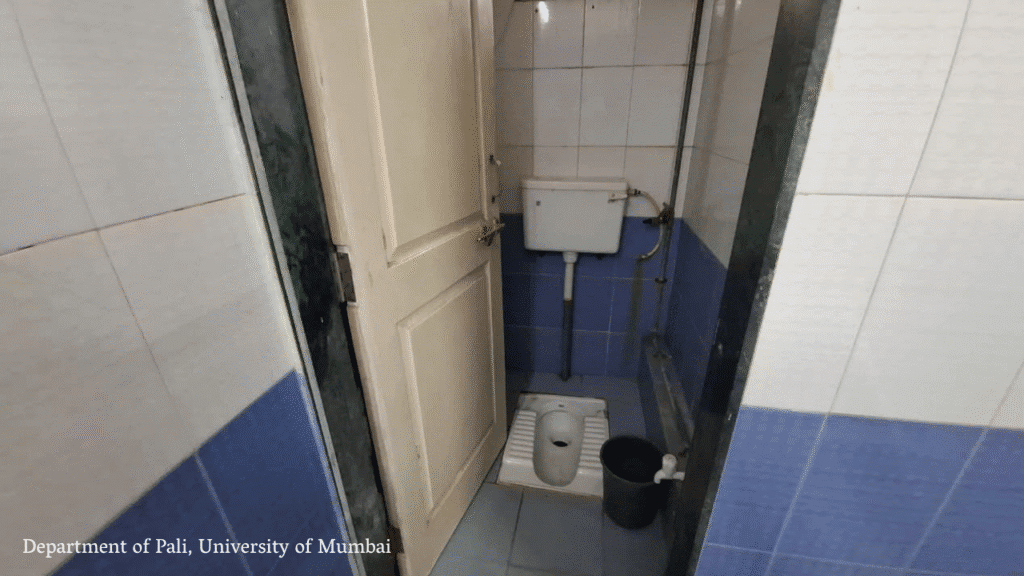
Across the University of Mumbai’s Kalina campus, students regularly complain about leaking taps, clogged drains, broken window panes, and washrooms with damaged locks. Many women speak about sanitary pad dispensers that have never worked, or dustbins that simply don’t exist.
To understand what these conditions mean for student health, I spoke with Dr. Shine Thomas, who explained the problems in clear, practical terms and why they should worry all of us.
Unclean Washrooms: A Perfect Place for Infections
According to him, the conditions seen in many campus washrooms create ideal spaces for bacteria to spread.
Unclean toilets can lead to:
- Urinary tract infections (UTIs)
- Stomach infections
- Skin rashes and fungal infections
- Allergies and respiratory irritation
“Wherever there is stagnant water, leaking pipes, or damp patches, bacteria grow rapidly,” he explained. A washroom used by hundreds of students each day needs multiple rounds of cleaning — not just a single sweep in the morning.
Broken Windows and Poor Ventilation Can Make You Sick
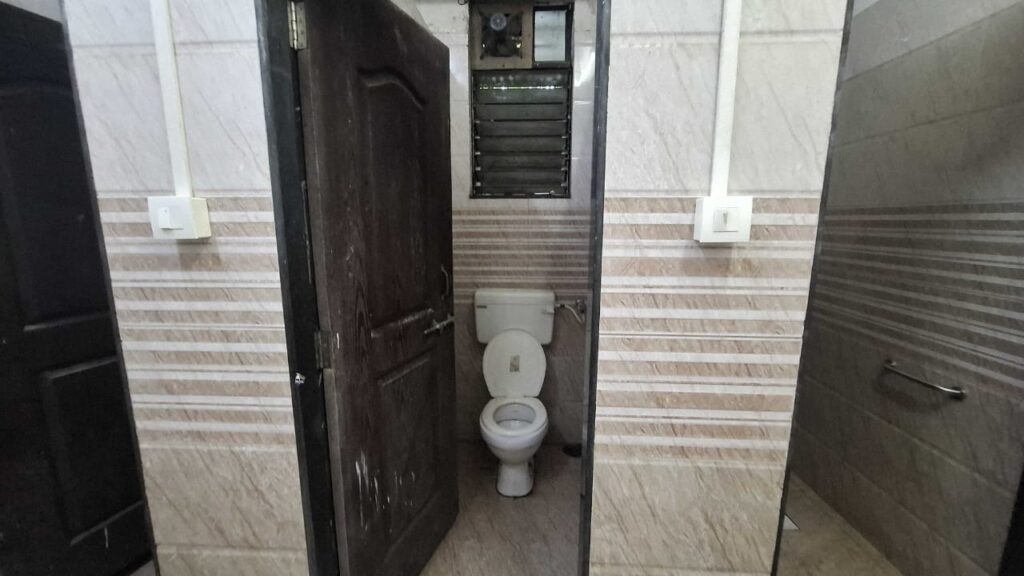
Some washrooms, especially in the Health Centre building, have broken or missing window panes. As a result, the space stays humid, smelly, and closed.
Poor ventilation means:
- Moisture gets trapped
- Mold grows quickly
- Breathing problems worsen
- Skin infections spread faster
A broken window may seem small, but medically, it increases health risks significantly.
When Women Cannot Access Menstrual Support
Mumbai University has tens of thousands of female students. Yet the number of functional sanitary napkin vending machines is shockingly low.
Many departments don’t have a machine at all. And in places where machines exist, like the English, Linguistics, and Health Centre buildings, students say they are often broken, rusted, or permanently empty.
This forces women to:
- Delay changing pads
- Borrow supplies
- Leave campus mid-day
- Carry extra pads “just in case”
From a health perspective, delaying pad changes can increase the risk of irritation, infections, or discomfort during long academic hours.
“The lack of menstrual hygiene support corners women into unhealthy practices,” he said. And without dustbins in many washrooms, even disposing of used pads becomes a stressful, unhygienic task.
Unsafe Washrooms Increase Stress and Anxiety
Students frequently mention privacy concerns: broken locks, loose door latches, and missing window panes.
A washroom should be a private, safe space, especially for women. But when students don’t feel safe, something deeper happens:
- They avoid using the washroom
- They drink less water
- They feel constant anxiety
- They rush between classes in discomfort
This isn’t just about infrastructure, it’s about dignity.
“Feeling unsafe in a washroom affects mental well-being,” the doctor explained. Long-term avoidance also affects physical health.
Disabled Students Suffer the Most
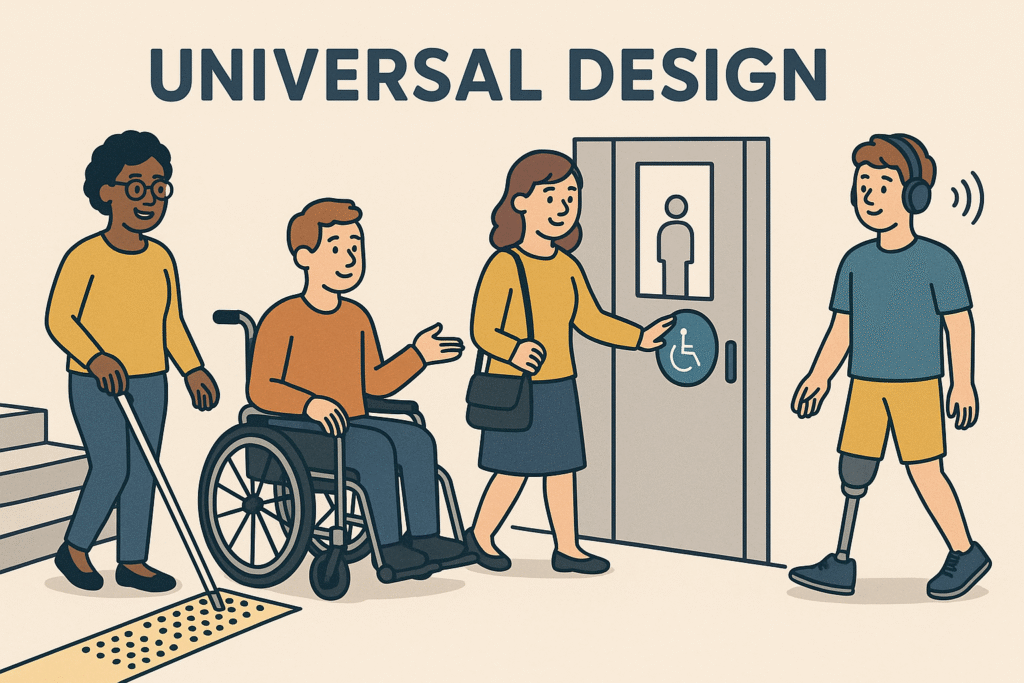
Some washrooms have “disabled-friendly” signs, but the services inside often fail to support disabled students.
Accessible washrooms need:
- Grab bars
- Dry, steady flooring
- Functional taps
- Non-slippery surfaces
If any of these are missing, disabled students face a higher risk of injury and infection, and are forced to depend on others for basic needs.

Running Out of Water Makes Everything Worse
In some buildings, the washrooms run out of water by afternoon. Without water:
- Students cannot wash their hands
- Toilets cannot be flushed
“Water is the foundation of washroom cleanliness,” the doctor stressed. Without it, even a clean washroom becomes unsafe in a matter of hours.
What Mumbai University Must Fix Immediately
Based on the discussion, here are the doctor’s key recommendations, simple, practical, and urgently needed:
Immediate Actions
- Ensure water supply throughout the day
- Repair broken taps, locks, windows, and drains
- Clean washrooms multiple times a day
- Install dustbins in every women’s washroom
- Fix and restock vending machines
- Improve ventilation
Long-Term Changes
- Renovate old washrooms entirely
- Build genuinely accessible washrooms for disabled students
- Create a monitoring system with student involvement
- Train staff and maintain accountability
- Treat hygiene as a core part of student welfare
A University’s Hygiene Reflects Its Respect for Students
Washrooms may seem like a small aspect of campus life, but they affect health, safety, dignity, and daily comfort.
As the doctor put it: “Students shouldn’t have to fall sick or feel unsafe just because they used a university washroom.”
If the University of Mumbai wants to remain a place where students thrive, then basic hygiene cannot remain an afterthought. Fixing washrooms is not only an infrastructure issue; it is an obligation to student health and dignity.
Navya Kalesan is a media researcher whose work focuses on student welfare, policy gaps, and campus experiences in higher education. She writes critically on how institutional promises often diverge from everyday realities.