Sudipa Mathur | 26th August 2025
Ronjon’s grocery store was a small rectangle of life in the center of Patrasayer, Neem Tola, Bishnupur, Bankura, West Bengal. It was filled with the smell of cumin and cardamom, fresh-cut ginger, and sweet, earthy potatoes. In the mornings, when the sun was a pale, soft thing, the villagers would come for their daily gossip and to pick up provisions.
Ronjon, with his graying hair and a smile that seemed to wrinkle the edges of his eyes, was the center of it all. His shop prospered not because of some hidden spell, but because he understood what his customers required before they did. He carried the best vegetables, extended credit in lean times, and always had a pleasant word. But where affluence flowered, so too did the weed of bitterness.
The Birth of a Rumor – Kala Jadu in Patrasayer
In the back streets behind Ronjon’s shop, other stores struggled. Their owners, a cluster of non-Bengali families who had moved into the village many years before, found their own clientele dwindling. They could not fathom it.
Ronjon did not sell anything they did not. He did not undercut prices. So, why did everyone go to him? The solution they discovered was a poison, a term spoken in hushed tones: Kala Jadu – Black Magic.
The first rumors were as subtle as the rustle of parched leaves.
“How else would his trade be so prosperous?” one would grumble to another.
“They say all Bengali people are versed in these things.”
The rumors spread like wildfire. An ill child, a poor harvest, a lost job—every setback in the village was now attributed to Ronjon. The charge was as simple as it was unprovable.
How do you dispute a curse? How do you demonstrate that you have not spun an evil spell?

From Respect to Isolation
Ronjon sensed the shift before he perceived it fully. The smiling faces turned cold, their warmth replaced by accusatory stares. The chit-chat ceased. Children were ushered away from him as if he carried a plague.
His once thriving store turned into a barren tomb. Kindness or quality products could not repair the rip in the village’s trust. The very atmosphere—once filled with the aroma of spices and laughter—was now heavy with suspicion. He clung on for months, a battered man on his solitary shop floor, the burlap sacks of rice and lentils gathering dust. Finally, the loneliness was more than he could bear.
The loss of his business was nothing compared to the loss of his reputation. He closed the shop, filled the windows with boards, and withdrew into the silent sanctuary of his house.
Faith as a Last Refuge
In search of comfort, Ronjon turned to his religion. He had always been a religious man, but now his prayers became his sole connection to the world.
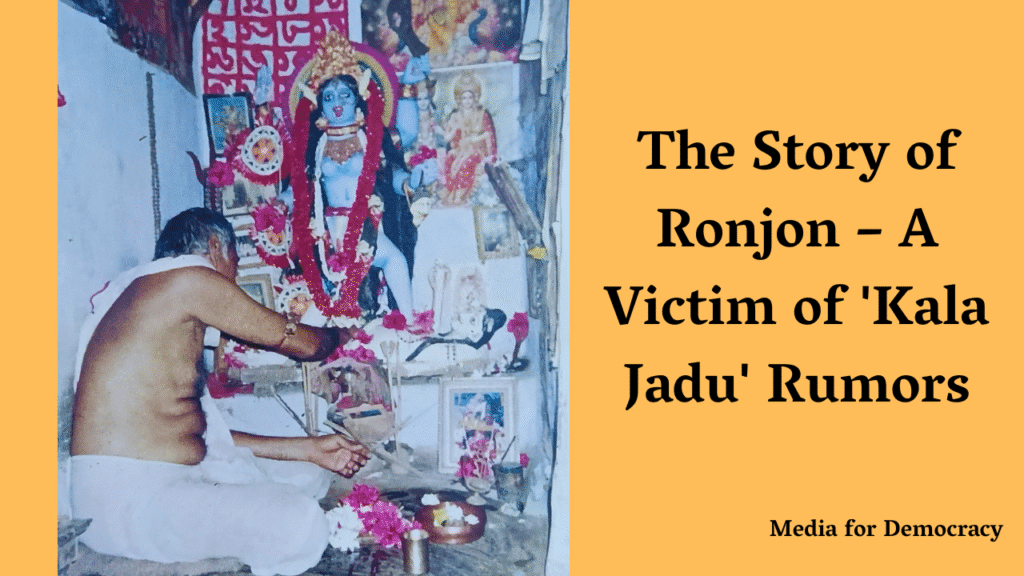
He began the daily practice of praying to Maa Kali, a goddess of unimaginable power worshipped by his people. Rituals and devotion became his lifeline. He believed that some higher power was watching over him, even if his neighbors were not. But the darkness of suspicion had not left him yet.
Betrayal Inside His Home
The rumors entered his home through his daughter-in-law, who was not Bengali. She had always been a loving presence, but soon, influenced by the toxic whispers of the village, she too began to suspect him.
Her husband—Ronjon’s son—was her only anchor, yet she believed that even he was under Ronjon’s control.
“He’s performing black magic on our child,” she whispered. “He’s attempting to keep us apart.”
The conflict erupted one afternoon. In anger, his daughter-in-law grabbed a bucket and, in front of stunned neighbors, began beating Ronjon. The metallic ringing of plastic against flesh echoed, and no one stopped her.
In their eyes, she was not attacking an old man—she was fighting a black magician.
The Final Blow
That day, the remaining threads of Ronjon’s spirit were torn asunder. He had lost his enterprise, his reputation, and now, his family. The irony was brutal: he had turned to religion for peace, only to have that same devotion twisted into proof of his guilt. Ronjon passed away three years ago from a heart attack in his home in Patrasayer.
Lessons from Ronjon’s Story
The tale of Ronjon is a harsh reminder that prejudice is a potent, blinding force. It shows how quickly a community can leap to blame someone for who he is—a Bengali, in this case—and ruin a life without evidence. Black magic is a chilling concept, but the true terror lies not in spells and curses, but in the human heart that can so easily damn another without proof. The real Kala Jadu was not in Ronjon’s prayers, but in the lies and insecurities that poisoned his village.
When belief becomes a weapon, truth becomes irrelevant. Compassion is lost. And in the silence of that loss, a man like Ronjon is left broken—not by curses, but by his neighbors’ fear.
Sudipa Mathur is a media researcher who explores how culture, prejudice, and social realities shape lives. Her writing challenges stereotypes and exposes hidden injustices.