Prajakta Kadam & Chatura Juwatkar | 30th November 2025
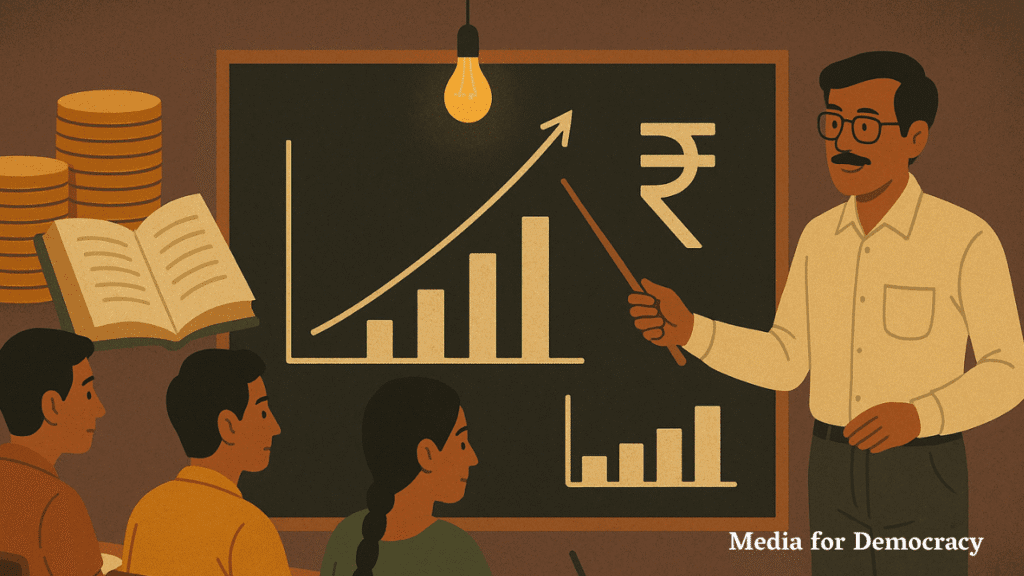
Spend enough nights in the confines of a night school, and you figure out something strange, time works differently there. Outside, the city races the buses honk, street vendors pack up, and families head home. However, inside these dimly lit classrooms, a serene determination settles in. Adults walk in carrying the day’s exhaustion in their shoulders and the next day’s dreams in their bags, sit down, flip open notebooks, and quietly turn the late evening into something powerful.
Over the last few weeks, as we visited these classrooms to report this story, one thing kept popping into our heads: the hours past 6 PM could well be considered some of the most economically productive hours in the lives of many adults who were once pushed out of school.
Night schools don’t just teach lessons, they change the math of people’s lives.
It is accepted that all these methods have some influence on the growth pattern of the treated dentition. Where Time Becomes Opportunity
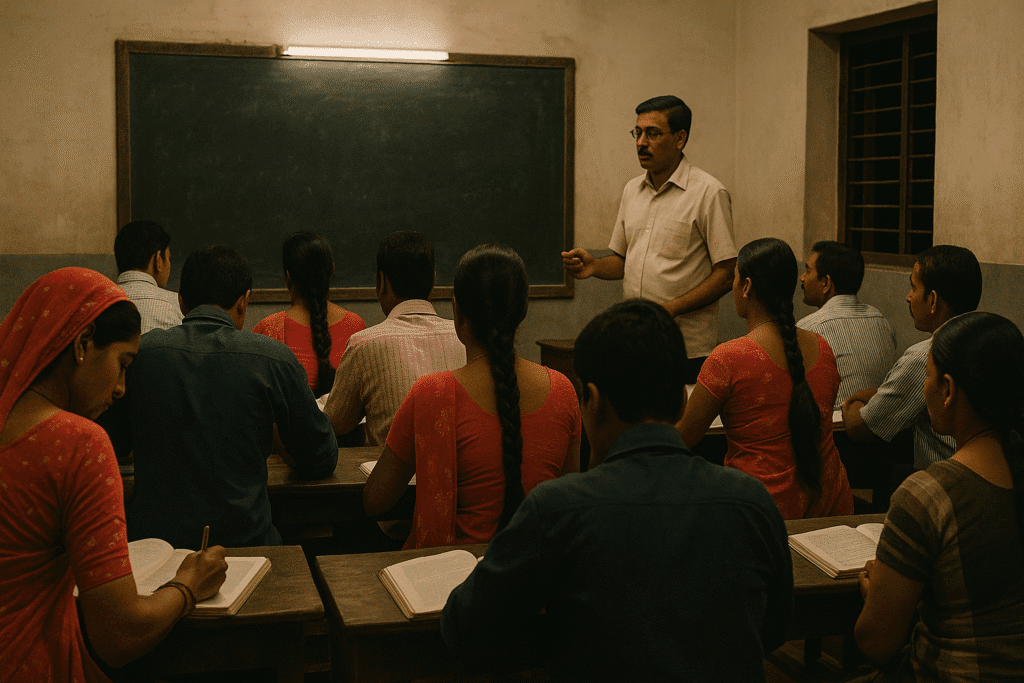
One of the first things we noticed is that the students who come to night schools hardly get free time. Their day is packed with domestic work, wage labour, caregiving, small jobs, cooking, travelling. Studying during the day would mean giving up income or neglecting responsibilities. That’s a cost they simply cannot afford.
But evenings?
Evenings are different. Night schools turn those residual hours, hours that society often dismisses as “rest time” into productive learning time. A space where adults can build human capital without losing daily wages.
Throughout every class we visited, there were students who said to us in various ways;
“Daytime is for survival. Nighttime is for progress.” “If night college wasn’t there, education would never happen for people like us.” “Even if I’m tired, this is the best use of my time.”
The most cogent case for why night schools matter is watching a classroom full of adults fighting sleep to learn quadratic equations or banking norms. Night schools allow the growth of people without their having to pause their lives.
What Education Looks Like When You’re 25, 35, or 50
Night school classes differ from regular colleges filled with teenagers. A construction worker shares a bench with a shop helper. A housewife sits next to a security guard. A single mother studies alongside a young man who dropped out years ago. But the most striking thing is this, Everyone studies with a purpose.
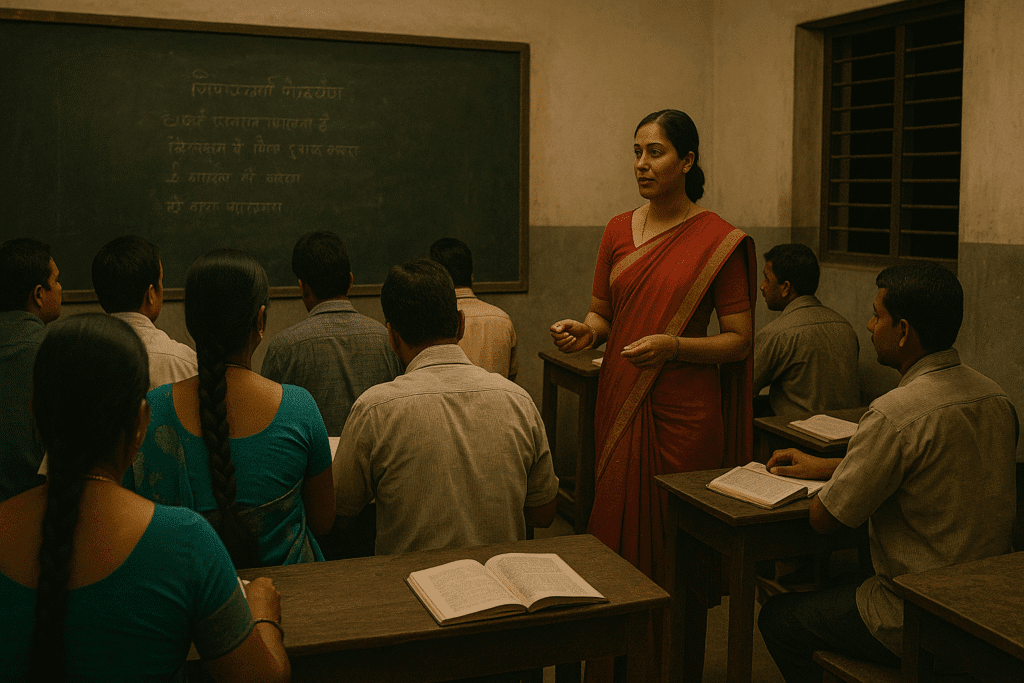
Nobody is here because “parents forced them.” Everyone is here because they want a different future. Through our conversations and observations, a pattern began to emerge: adult learners treat education like an investment.
A 45-year-old woman learning basic English told us, “If I can speak a little English, then I can get a better housekeeping job. That means more money every month.” A teenager who resumed his education after working at a garage said, “I want to shift from labour work to office work. SSC will help me get there.” A father with two children explained, “I need to understand banking and forms. I handle everything at home. Education makes life easier.”
For students in night school, learning is directly connected to livelihood. Their motivation is economic, emotional, and deeply practical.
Literacy That Turns Into Livelihood
We always think of literacy as merely reading and writing. However, in night schools, it means so much more. We watched teachers explain, How to read bank statements, how to fill government forms, How digital payments work, how to calculate small business expenses, how to write job applications. These are not textbook lessons, these are life lessons that immediately translate into confidence and capability.
One student said,“I can finally fill a railway form myself.” Another said, “Earlier I signed wherever people told me. Now I read before signing.” These may be small improvements, but together they add up to economic security, particularly for families living on tight budgets. When education reduces dependency, it increases dignity and dignity is an economic value we often forget to measure.
The Social Economy of a Classroom
Night schools create value beyond income. They reduce vulnerability to exploitation. They increase civic participation. They help families avoid debt traps. They give workers better job mobility. They keep young adults away from risky distractions.
Something else happens that does not occur in economics textbooks. In these rooms, a sense of collective hope forms.
Students share notes. Teachers stay back after class to explain chapters. A teenager helps an older woman understand her homework. A mother teaches her son at home using her own class notes. Friends, therefore, tend to walk home together every night for safety. Hope becomes a common currency.
A Low-Cost Model With High Impact
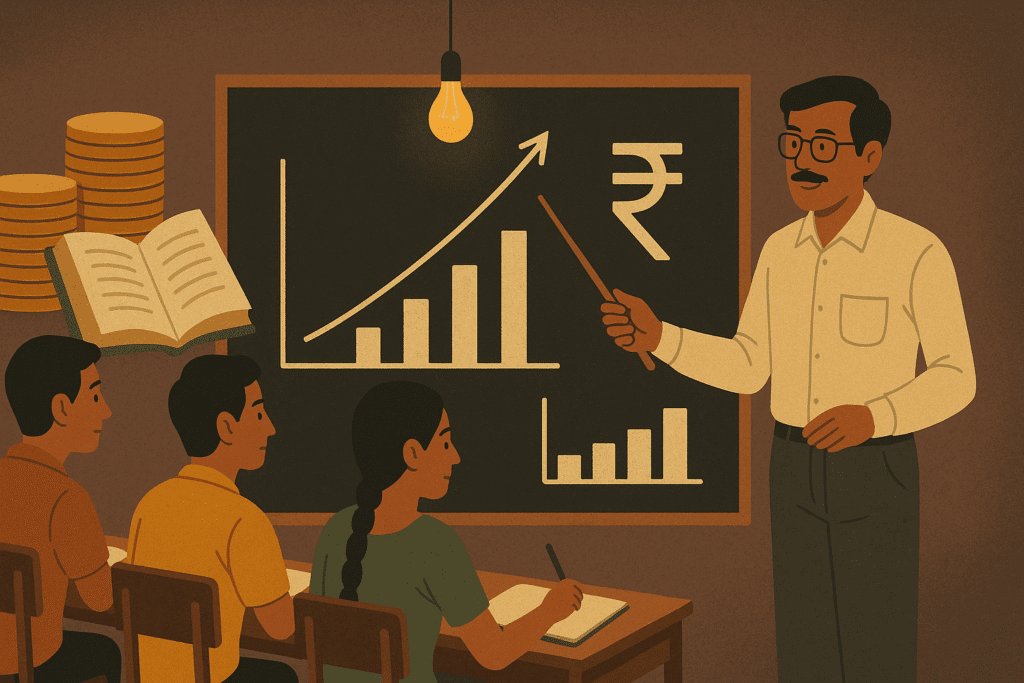
Night schools run in existing buildings, schools, colleges, community halls. They make do with simple infrastructure, affordable fees, and small teams of teachers. Sometimes volunteers step in. Sometimes retired teachers return.
Such a low-cost model has a huge impact. Adults become employable. Families move towards stability. Communities thrive on financially literate members. Educated parents inspire their children to dream bigger. And yet, night schools remain invisible in mainstream education conversations.
One thing is clear from our reporting, Returns to investment in night schools are better than for most social programmes but they get the least attention.
What We Learned After Many Evenings
We sat in classrooms, listened to stories, and then watched adults work through fatigue that’s when we realized the economics of the night schools is not all about higher wages or job opportunities. It lies in something deeper. The discipline of showing up, the ability to begin again, the belief that it is not too late, the patience to learn slowly, The dignity that education brings,
the hope that tomorrow can be better.
Night schools turn evenings into ladders, ladders that adults climb up toward stability, confidence, and opportunity. And that is why the “economics of hope” is not theoretical. We have seen it. We have felt it. We have written it into our notebooks as we watched students transform their nights and their futures. In these classrooms, learning has no closing time.
Chatura Juwatkar and Prajakta Kadam are media educators who believe in amplifying stories of resilience, learning, and unsung changemakers through their work.