Pushpa Gajabe | 26th December 2025
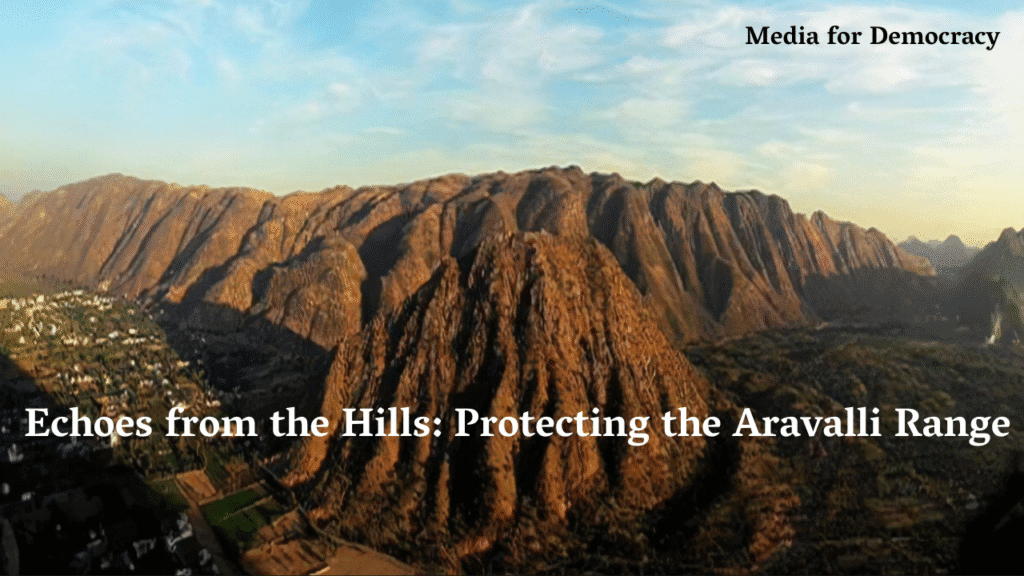
The Aravalli Hills, stretching across Delhi, Haryana, Rajasthan, and Gujarat, are not only India’s oldest mountain range but also a vital ecological shield. These hills prevent the eastward spread of the Thar Desert, support biodiversity, recharge groundwater, and stabilize the climate of the surrounding regions. Stretching over 650 kilometers, the Aravallis are home to forests, wildlife, and important rivers like the Chambal, Sabarmati, and Luni. Over the past four decades, however, rapid urban expansion, illegal mining, and deforestation have severely damaged this ancient ecosystem.
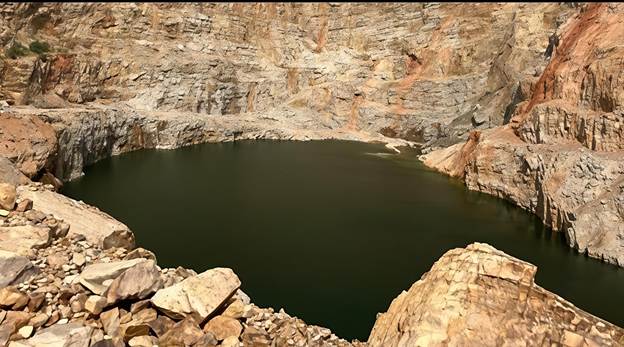
( Illegal mining and excavation have left deep scars in the Aravalli landscape, threatening ecological balance and groundwater recharge. Source: Hindustan Times – Article on Aravalli mining)
Communities living near the Aravallis are already feeling the impact. Farmers report declining water availability, affecting crop yields, while villages face a shrinking supply of drinking water. Wildlife habitats have been fragmented, pushing animals closer to human settlements. Unregulated quarrying and stone crushing have worsened air quality and contributed to soil erosion. The ecological importance of the hills means that any damage directly affects both humans and the environment.
Recognizing the urgent need for action, the Supreme Court of India and the Central Empowered Committee (CEC) have taken several steps. In 2024-2025, the Court established a uniform definition of the Aravalli Hills and Ranges, ensuring that all states identify and protect the same areas. The CEC recommended a scientific mapping of the entire range, macro-level environmental impact assessments, and strict prohibition of mining in sensitive regions, including protected forests, tiger corridors, aquifer recharge zones, wetlands, and areas within the National Capital Region.
While existing legal mining continues under regulation, new mining leases are paused, and the Court has mandated that mining in sensitive areas remain prohibited. These measures are designed to protect the hills without completely disrupting the livelihoods of laborers dependent on mining, balancing ecological preservation with human needs. Online monitoring, stricter regulations for stone crushers, and restrictions on explosives further aim to reduce environmental harm.
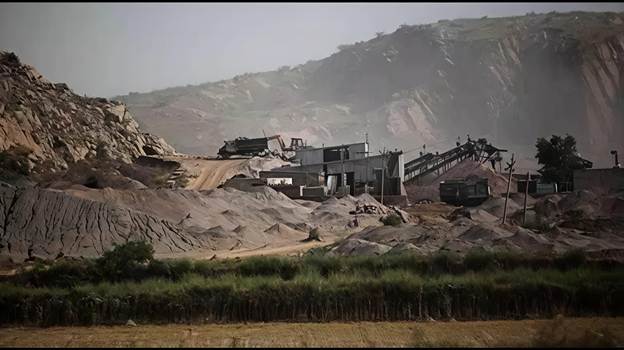
(Quarry sites and exposed rock formations show how unregulated extraction has transformed parts of the ancient Aravalli range. Source:Indian Express – Article on illegal mining in Aravalli)
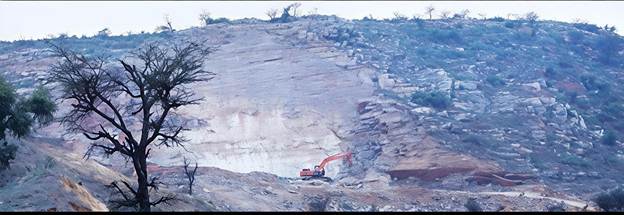
(Former mining pits and broken terrain reflect the cumulative impact of decades of unregulated stone extraction across the Aravallis. Source:Down To Earth – Photo of Aravalli mining impact)
In addition to regulatory action, the government has launched the Aravalli Green Wall Project, which seeks to restore degraded land, enhance green cover, and combat desertification. Covering 29 districts across Delhi, Haryana, Rajasthan, and Gujarat, the project aims to restore 26 million hectares of land by 2030. Local environmental groups and citizen initiatives complement these efforts, planting trees, raising awareness, and advocating for stricter enforcement of environmental laws.
Protecting the Aravalli Hills is not just about conserving a mountain range. It is about safeguarding water security, biodiversity, and the livelihoods of millions who live near the hills. It is about ensuring that the ecological shield which has stood for nearly two billion years continues to protect India’s environment and people. The challenge is urgent, but with scientific planning, strict regulation, and collective action, the Aravallis can be preserved for generations to come.
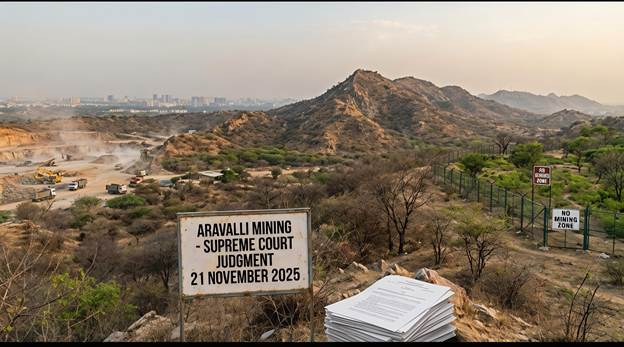
(Marked landscape near a mining‑affected zone highlights ongoing legal and environmental debates over Aravalli protection. Source: Substack / Environment reporting – Mining‑affected area)
References
1. Koshy, Jacob. “How is the Aravalli range to be protected? | Explained.” The Hindu, December 19, 2025.
2. Supreme Court of India. In Re: Issue Relating to Definition of Aravali Hills and Ranges, I.A. No.105701 of 2024 (CEC Report No. 03 of 2024), Writ Petition (C) No.202 of 1995, T.N. Godavarman Thirumalpad vs Union of India & Others. 2024-2025.
3. Ministry of Environment, Forest and Climate Change (MoEF&CC). Aravali Green Wall Project, 2025. Government of India.
Pushpa Gajabe is a media researcher with a keen interest in society, culture, and communication. She writes on issues of public concern, highlighting voices often left unheard and exploring the role of media in shaping narratives.