Kartik Nair | 25th October 2025
Entertainment has always been a part of human life. It changes with time, but its purpose remains the same to make us laugh, think, relax, and forget our worries for a while. This generation has endless options movies, social media, streaming apps, and even AI that can talk, sing, or write stories or create complete videos that are very realistic. But for the older generation, things were very different. Their world of entertainment was simpler, slower, and often more personal.

Entertainment in Their Time: Simple Joys and Real Connections
For the older generation, their youth was a smartphone-less, television-less, and internet-less era. The entertainment was in real time, shared, and most of the time they used to work very hard. There was a time when people used to wait for their friends actually and play for hours. People would sit around a radio at night, waiting with enthusiasm for the latest songs, news, or dramas. Individuals recall the sound of the radio not only as a machine, but as a device that filled their living rooms with music and imagination. No screens were present, just voices but those voices created images in their minds. Entertainment outdoors was equally vital. Individuals attended plays, folk dances, and puppet shows in their villages or towns. The theatre was the greatest source of happiness. Others still remember the exhilaration of attending a live stage drama the actors’ genuine feelings, the aroma of the audience, the resonance of laughter within the hall. Sports were another form of entertainment. Children played marbles, kabaddi, cricket on the streets, or simple games with stones and twigs. Every function had songs, storytelling, and laughter. There were not fancy gadgets, but there were people and that made it unique.
Rich and Poor: Selective Entertainment
Entertainment was not same for everyone . The poorer and the richer had different types of styles all together. What the rich believed to be normal for people who are not monetarily sound found it difficult. The wealthy had access to more private entertainment like record labels to listen to music and televisions, or trips to cinema halls. In large cities, they were in a position to visit plays, and film shows. Having a radio or a black and white television set was a status symbol. On the other hand, the poor enjoyed public places and traditions for amusement. Street plays, temple festivals, folk songs, or simply talking to their hearts content was the means of entertainment. For them, entertainment was inexpensive and common. They lacked machines, but they enjoyed time, community, and imagination. What is amusing is that although both rich and poor had their own types of entertainment, both of them had a keen ear for stories and community

What They Think About Entertainment Today
When you talk to older people today, many smile and reminisce when asked about modern entertainment. When asked they kept saying, “We had less, but we enjoyed more.” They see today’s world full of screens mobile phones, tablets, and televisions everywhere. Many of them believe that entertainment today is faster, louder, and sometimes meaningless. They miss the warmth of human contact, friends sitting together, laughing, singing, or just talking. Most of the elders also feel that the new type of entertainment makes people lazy and distracted. “We used to go out and play, now everyone just sits and scrolls,” they often say. To them, entertainment was not just watching it was doing. It was participating, not just consuming. Yet, many also admire modern technology. They are amazed that one can watch any movie at any time, or listen to any song from anywhere in the world. They like that information and entertainment are so easily available. For many grandmas and grandpas, YouTube and WhatsApp videos have become daily companions. But they also worry that people especially the young are becoming too dependent on screens.

What They Are Watching Now
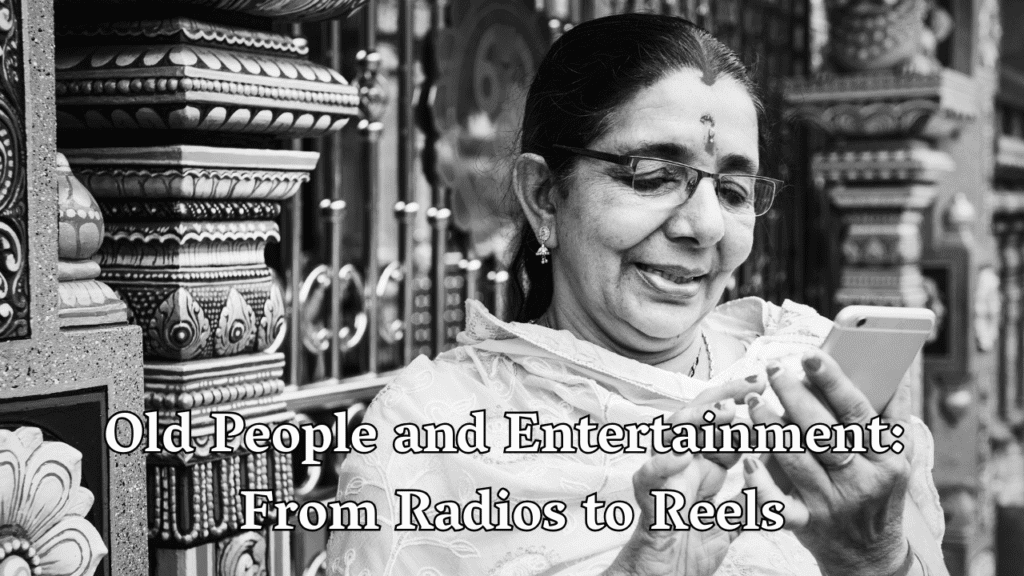
Despite the gap between generations, old people have found ways to adapt. Many enjoy watching television shows, especially family dramas, news channels, or devotional programs. Some love old movies on streaming apps because they remind them of their youth the songs, the stars, the emotions. Music remains a major source of comfort for them. Old songs on FM radio or YouTube take them back to their memories. They hum along, reliving moments from their past. For those who live alone, TV shows or music channels become their company. Some elders are even exploring the digital world. They use smartphones to video call their children or watch cooking videos. They forward jokes and festival greetings on WhatsApp. Slowly, technology has become part of their entertainment too though often with help from younger family members.

AI and the Elderly: Trust and Confusion
Now, artificial intelligence (AI) is even becoming part of their entertainment. But old people have mixed feelings about it. Many find AI helpful and fun. Talking to a virtual assistant like Alexa or Google Assistant makes them feel less lonely. Some use it to play songs, check the weather, or ask simple things like, “Call the vegetable vendor”. For them, it’s like a friendly helper who never gets tired. But others are confused or even suspicious. They sometimes believe everything the screen shows because they think if it’s on the internet, it must be true. They base most of their decisions based on this. Which is potentially a hazard. This makes them easy targets for fake news, false videos, and scams. They may not always understand that AI can make mistakes, or that not every message is real. Like for example an old lady felt scared from the video showing volcano erupting and a village burning. She didn’t know that the video was AI generated.
At the same time, many elders are curious. They ask, “How can a machine talk like a human?” or “Does it have feelings?” Their curiosity shows that they still want to learn even in old age. If guided well, AI can actually help them stay mentally active, learn new things, and feel more connected. Some even speak directly to Google assistant like talking to humans. “ Bharat ki rajdhani kya hai jara batana?” one of the many things they said to the AI. They also keep on talking with it, when asked why they talk to a non living thing, they say that “not many people prefer talking to an old person, and this small thing dosen’t mind how many hours I spent talking to it. Be it this phone or Alexa at home.”
Looking Back, Moving Forward
Live stage performances have given way to online streaming, community meetings have given way to private screens, radios have given way to artificial intelligence voices, and so on. However, its methodology the pursuit of happiness, connection, and purpose remains constant.
Elderly people serve as a reminder of something we frequently forget: entertainment is about community and togetherness as much as it is about technology. A good song, a humorous story, and a shared laugh were the simplest things that brought them joy. Perhaps we can learn to slow down, appreciate the little things, and connect with others from the endless reels and videos we watch.
Kartik Nair is a media researcher who studies cinema, culture, and social change. His work explores how films and popular narratives shape public understanding of issues like caste, inequality, and representation in contemporary India.