Aishwarya Rajput | 18th November 2025
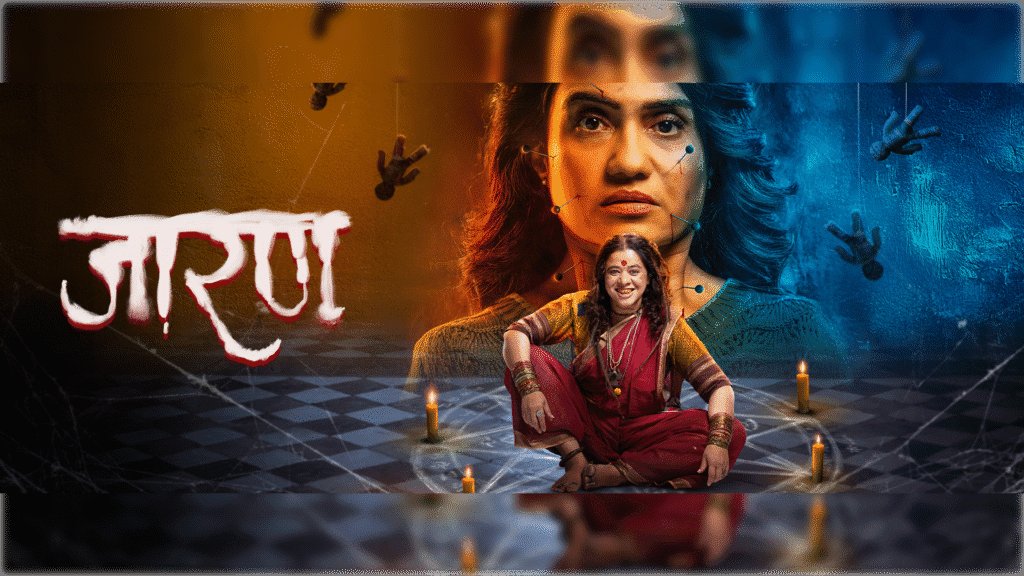
Is Black Magic real? Was she imagining things? Did she really need the help of a psychiatrist like her father suggested, or did she need saving from evil energy like her mother believed? Jarann is a perfect blend of psychology and horror, a film that leaves you questioning: what was the reason behind her behaviour? Hrishikesh Gupte, the director of the film, successfully presented the story without rejecting or accepting the belief in the presence of evil or god, leaving it to the audience to interpret it the way they want. This is the third successful Marathi film of 2025, with a positive return of ₹ 9 crore on an investment of ₹ 5 crore. The film was theatrically released on June 6, 2025, in theatres across India. Jarann explores themes of psychological turmoil, black magic, and ancient superstitions.

THE JARANN STORY
Set in a remote Konkan village, Jarann unravels the fragile boundary between trauma and the supernatural. Radha travels with her daughter, Saie, to her ancestral home, where she discovers an old doll, an innocent object that sparks deeply disturbing changes in her behaviour. Even after returning home, the episodes persist.
It is revealed that Radha has displayed similar symptoms since childhood and has long been under the care of psychiatrist Dr Dhananjay Kulkarni. Her past holds the terrifying belief that she was once a victim of black magic cast by a woman named Ganguti. Though she had seemingly recovered, her marriage to Shekhar reignited the episodes.
The film explores whether Radha can ever be truly healed, and what hidden power the doll might hold. Childhood trauma, folk mysticism, and psychological fragility blend into a narrative that keeps viewers guessing: is Radha haunted, or simply hurting? Gupte leaves the line tantalizingly blurred.
UPSIDE – DOWN WORLD OF BLACKMAGIC
Black Magic is simply done to fulfil one’s greed to gain luxury, fame, or to harm someone, or to prevent the other person from succeeding. It is done by providing something to the spirit in return for getting your job done. It is a give-and-take process; sacrifices are made to get your work done. The one who is doing the black magic usually offers his or her blood to the spirit to get the job done.
The history of black magic is deeply rooted in ancient human civilisations. It developed from early spiritual practices, but its origins are not tied to a single culture, having precedents in ancient Indian Vedic texts, Egyptian mythology, and Greek folklore. Over time, many of these practices became forbidden or dangerous in the eyes of mainstream society.

India is ranked first as the country to practices black magic the most. Certain parts of India are known for black magic, like Kokan, Kerala, Kolkata, and Mayong. Jarann is set in a remote area of Konkan. Konkan is famous for Black Magic, which refers to beliefs and practices of black magic, superstitions, and associated folklore prevalent in the Konkan region of Maharashtra. This includes stories about spirits like the Chakwa, which is said to lead travellers astray, as well as the existence of practices such as using voodoo dolls and other rituals, which are often linked to negative outcomes.
In the Konkan region, spirits are purchased to get their job done. Some experts or gurus who have gained the knowledge only they can perform a ritual to cast the black magic. Black Magic is a never-ending process; you can remove it from someone, but it can be cast again, or it can be reversed on the person casting it, causing him or her harm. To keep yourself protected person needs to keep their aura clean and keep their soul pure by practising meditation, chanting mantras, etc. Sweets are a common medium to cast the black magic. It is done by feeding something to someone. And after removing the black magic, the after-effects of it last 1-2 weeks.
SOCIAL ISSUES THE FILM ADDRESS
Jaran talks about how our beliefs and fears overpower our rationality, and where medical help is needed, it is overlooked and can be fatal for the patient. Amruta Subhash shows vulnerability, fear, and inner conflict, humanising mental health struggles, making viewers empathise rather than judge “possessed” women. Anita Date-Kelkar as the eerie “witch” figure highlight the contrast between superstitious fear and rational explanation. Their performances break stereotypes of women as “hysterical” or “cursed”; they promote empathy for trauma survivors.
The film critiques widespread rural practices like buva-baai, exorcisms, and fear of black magic, which often mask or exacerbate mental illnesses (e.g., PTSD, schizophrenia, grief disorders). It shows how labelling psychological issues as “supernatural” delays treatment and harms families (especially women and children). And mostly women are the primary victims of such beliefs, their mental health is neglected, their trauma and emotional responses are ignored. Most of the men are still unaware of post-natal depression and how to process emotions in the first place. The film subtly advocates for women’s mental health rights and education. The film also explores how fear perpetuates cycles of abuse/isolation shown in Radha’s behaviour, and how it was a call for rationalism and scientific temper.

AUDIENCE’S TAKE ON THE FILM
Audiences have largely embraced Jarann (2025) as a gripping psychological thriller that masterfully blends superstition with mental health themes, with Amruta Subhash’s raw, “Oscar-worthy” and “terrified, terrifying, terrific” performance emerging as the unanimous highlight, many viewers credit her alone for elevating the film, calling it a career-best portrayal of vulnerability and inner turmoil that leaves lasting unease. The atmospheric tension, eerie Konkan village setting, haunting sound design, and deliberate ambiguity between black magic and psychology have been praised as a “breath of fresh air” in Marathi cinema, often leaving viewers stunned, scared even at 2 AM viewings, and sparking intense post-screening debates about rationalism versus blind faith. While some appreciate the slow-burn pacing for mirroring real trauma and commend supporting acts like Anita Date-Kelkar’s chilling cameo, others criticise the deliberate slowness, predictable tropes in the first half, and an abrupt or unclear climax that frustrates rather than resolves. Overall, it’s hailed as a bold, thought-provoking “spooky Marathi gem” worth experiencing in theatres for its depth, despite not being a traditional jump-scare horror, earning solid 7/10 ratings from many and strong word-of-mouth success.
REAL LIFE HORROR
In July 2025, in Temta village (Purnia district, Bihar), a mob brutally murdered five members of a tribal family, including a couple and their relatives, after accusing them of practising witchcraft (“dayan pratha”). The attack was triggered when a child in the village fell seriously ill shortly after another child’s death, leading villagers (guided by a local ojha or faith healer) to blame the family for casting black magic spells. The victims were dragged from their homes, beaten, and hacked to death with axes. Police arrested several suspects and formed a special team to investigate, highlighting how untreated illnesses and deep-rooted superstitions in rural India often lead to such deadly scapegoating, despite state laws against witch-hunting. Similar cases continue across states like Jharkhand, Odisha, and Chhattisgarh, claiming dozens of lives annually, mostly women.
BEYOND THE SCREEN-A CALL FOR RATIONAL AWAKENING
Jarann does not merely entertain; it holds up a mirror to Indian society and asks a question we have avoided for centuries: When a woman screams in pain, do we reach for a psychiatrist or for a buva? The film refuses to give an easy answer, and that is precisely its power. By leaving the existence of black magic deliciously ambiguous, Hrishikesh Gupte forces every viewer to confront their own beliefs, and, more importantly, the deadly consequences when superstition wins over science. As long as mental health crises are misdiagnosed as “jade-tona”, as long as grief, trauma, and postpartum depression in women are labelled possession rather than illness, such bloodshed will continue, sometimes with axes, sometimes with slow social death.
Through Amruta Subhash’s haunting performance and its chilling Konkan shadows, Jarann achieves what few films dare: it turns the horror genre into a weapon of advocacy. It reminds us that the scariest monsters are not spirits hiding in old dolls, but the ignorance we carry in our minds. In an era where Marathi cinema is boldly reclaiming its legacy as a voice of social reform, Jarann stands tall as proof that a well-told story can do what laws and awareness campaigns often fail to achieve: it can make an audience question, empathise, and, hopefully, change.
The doll is finally silent. The question is: will we remain bewitched, or will we finally choose reason? The answer, like the film itself, lies with us.
Aishwarya Rajput is a media researcher and writer exploring the intersections of cinema, culture, and community narratives through an academic and creative lens.