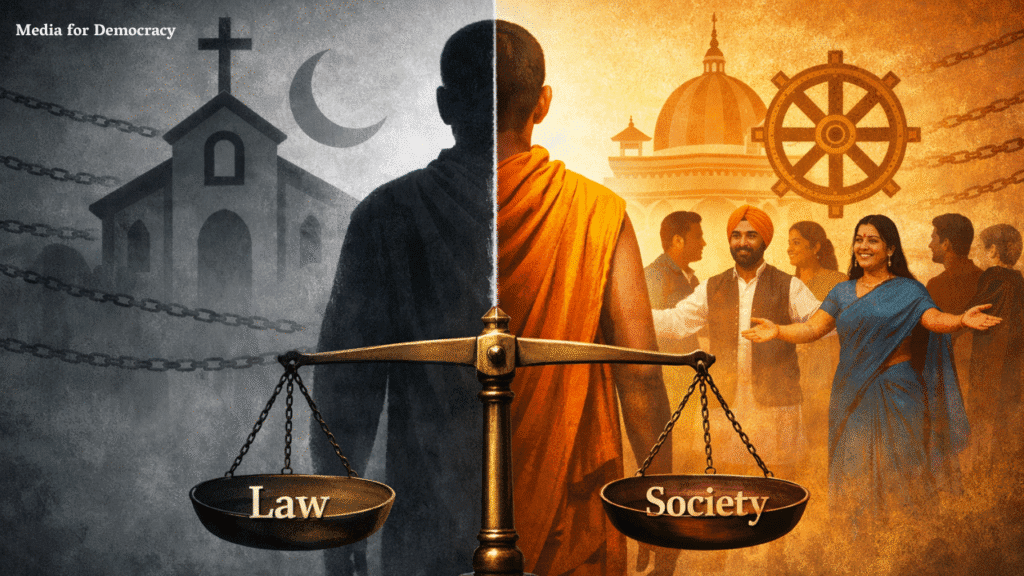
The Supreme Court’s recent observations on the status of Scheduled Caste (SC) individuals after religious conversion and reconversion bring back into focus a complex and often uncomfortable truth about Indian society: identity here is not merely personal—it is deeply social, legal, and historical.
At the heart of the issue lies a simple but sensitive question: if a Dalit converts to another religion and later returns, can they reclaim their Scheduled Caste status?
The Court’s answer is cautious, and perhaps necessarily so. It makes it clear that such a return is not automatic. A person who converts out of Hinduism, Sikhism, or Buddhism loses their SC status under the law. If they later reconvert, they must do more than just declare a change of faith. They must prove their original caste identity, demonstrate a genuine return to the religion, and—most significantly—show that their community has accepted them back.
This insistence on community acceptance is where the judgment touches a raw nerve.
In a modern constitutional democracy, where individual choice and dignity are meant to be paramount, the idea that one’s identity depends on community approval may appear unsettling. Yet, the Court is not creating a new rule—it is acknowledging an existing social reality. Caste, unlike many other identities, is not self-determined. It is shaped and sustained by social recognition.
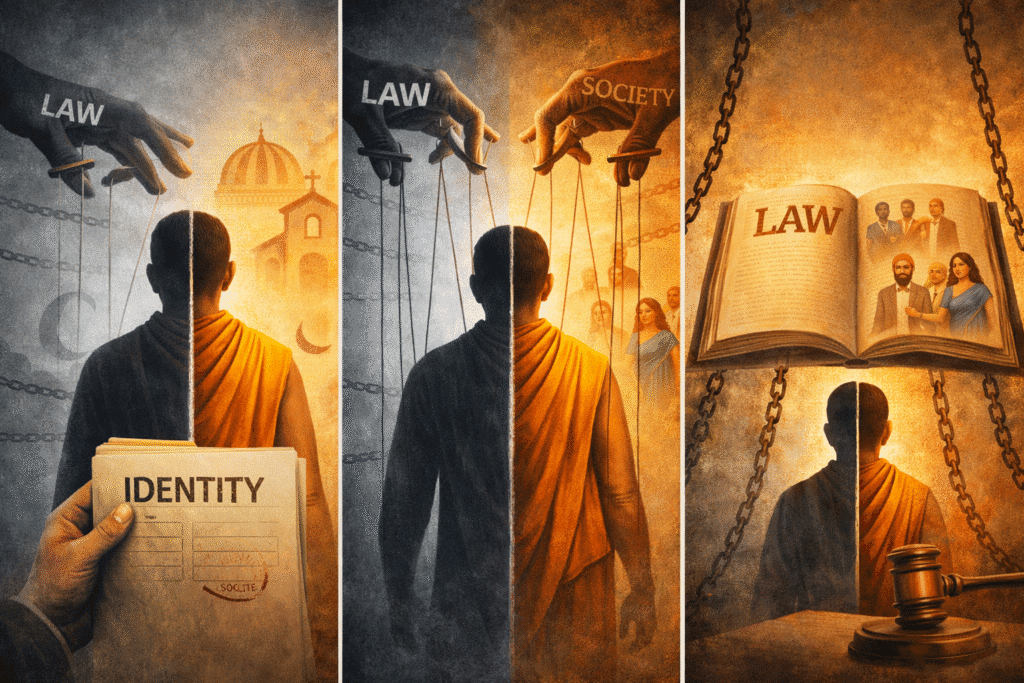
The legal framework around Scheduled Castes has always been tied to this reality. Reservations and protections are not granted merely on the basis of birth, but on the experience of social disadvantage and discrimination. When a person leaves the religious fold in which caste operates in its traditional form, the law assumes that this disadvantage may no longer apply in the same way. Whether that assumption holds true in every case is, of course, open to debate.
What the Court seeks to prevent is the mechanical or strategic use of caste identity—where it is shed and reclaimed for convenience. By requiring proof of genuine reconversion and community acceptance, it attempts to ensure that the benefits meant for historically marginalized groups are not diluted.
However, the judgment also raises difficult questions. What happens when a person sincerely returns but is denied acceptance by their community? Should access to constitutional safeguards depend on social approval, which can itself be exclusionary or arbitrary? And does the current legal position adequately reflect the lived realities of caste discrimination across religions?
These are not easy questions, and the Court’s ruling does not claim to answer all of them. Instead, it draws a line—one that reflects both the constraints of the Constitution and the complexities of Indian society.
Ultimately, this issue is not just about legal status. It is about belonging. It is about whether identity can ever be fully reclaimed once it is lost, and who gets to decide that.
The Supreme Court’s clarification may settle the law for now, but it leaves society with a deeper challenge: to confront the enduring grip of caste, even in matters of faith, choice, and return.