Pranjaly Manna | 4th December 2025
Each year, Kolkata changes face during Durga Puja, one of India’s largest festivals. The streets are lit up with light, pandals become galleries of art, and drums fill the air, mingling with incense. Durga Puja is a celebration of good triumphing over evil and Bengali culture’s core. But under the festivities is a grim tale one of the River Ganga, which carries the burden of human piety in silence. While individuals rejoice at the Goddess with devotion and adoration, the river goddess who is worshipped along with her suffers from contamination.
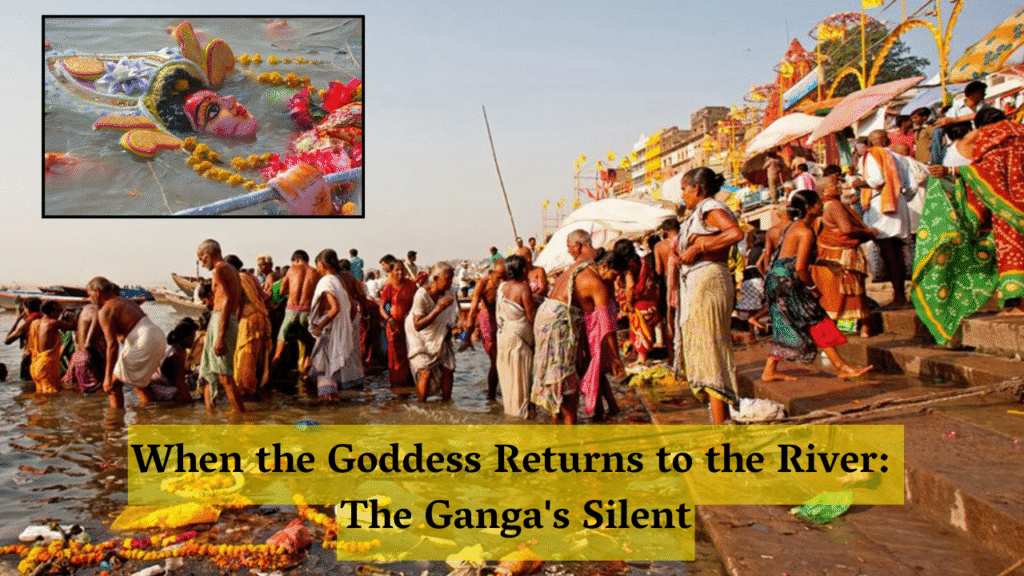
For centuries, the Ganga has been worshiped as a mother, Ganga Ma, representing purity and life. Millions of individuals take baths in her waters for spiritual cleansing. This devotion, however, is generally contradictory in nature. When idols of Goddess Durga are submerged in the river following the ten-day festival, the Ganga gets polluted, victim to the materials that are part of these idols as well as offerings.
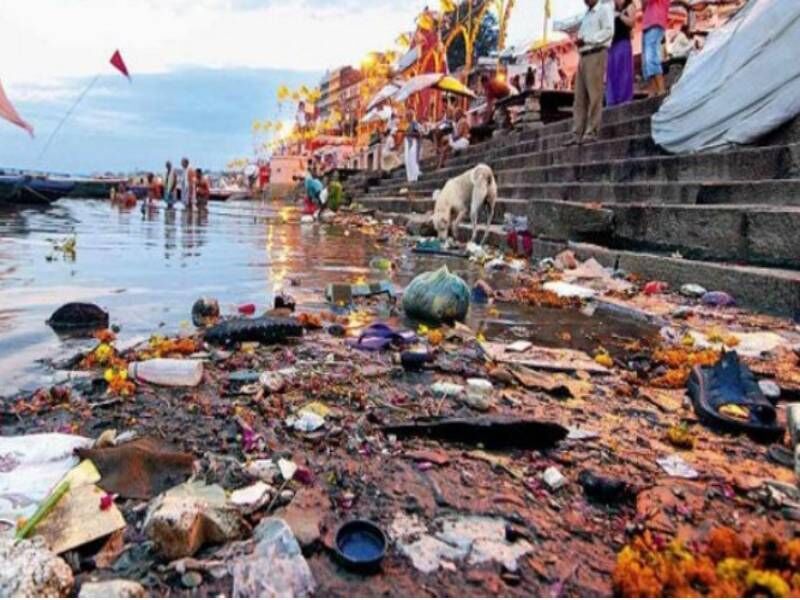
A recent study in 2018 carried out by Techno India University and the University of Calcutta made this issue evident. Scientists tested water quality both before and after idol immersion and discovered shocking rises in heavy metals. Lead rose by over 100%, chromium by 169%, and cadmium by 125% at famous ghats like Babughat, Shibpur, and Princep Ghat. These metals are toxic to both humans and animals. Lead destroys the nervous system, chromium destroys the liver and kidneys, and cadmium deposits in the body with long-term health consequences. The pollution does not remain stagnant; tidal currents disperse it in the river, impacting fish, plants, and consumers of these who are human.
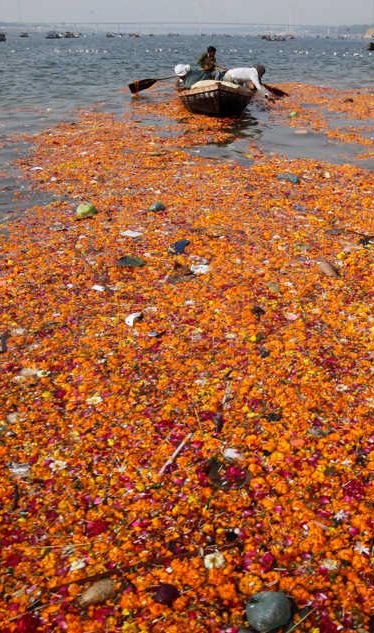
The pollution is mostly generated by the materials employed in creating the idols and decorations. Earlier, artisans employed natural river clay and coloured idols with hues extracted from flowers and herbs. Now, nearly all idols are constructed from Plaster of Paris and heavy metal-containing synthetic paints. Thermocol decorations, plastic ornaments, and flowers wrapped in polythene are also discarded into the river, adding to the poisonous burden. What is intended to be an offering to the Goddess becomes the destroyer of her abode, the river.
The ghats have a sorrowful tale after the festival. The water, which was sparkling, becomes murky. Pieces of broken idols, bamboo frames, thermocol, and plastic quietly float in the river. The study indicates measures that can save the river without influencing religious rituals. Utilizing natural clay for idols, vegetable dyes for painting, and segregation of recyclable or biodegradable products prior to immersion can minimize pollution. Some go to the extent of suggesting iron idols, which would benefit river ecosystems by nourishing plankton and aquatic life.
Durga Puja is not about rituals alone; it’s about celebration of power, renewal, and devotion. But real devotion means concern for nature too. Staying at Babughat on Dashami evening, one finds thousands rejoicing with sentiment as idols disappear into the river. But when the Goddess steps into the water, she brings along with her the pollution of human action. The Ganga, kind and merciful, keeps flowing, but only so long as she can take it. In order to honour the Goddess, humans need to honour the river too.
This is not specific to Kolkata. The Kumbh Mela at Prayagraj where the Ganga, Yamuna, and Saraswati merge draws millions of pilgrims. An estimated 45 crore people will visit in 2025. According to reports by the Central Pollution Control Board (CPCB), however, there is extreme pollution in the Ganga caused by faecal coliform bacteria from untreated sewage. Levels at crucial points like Shastri Bridge and the Sangam are far beyond safe levels, rendering the water unsafe for bathing. This pollution has the potential to lead to gastrointestinal infections, skin ailments, and other ailments.
The CPCB also analysed the effect of mass bathing on the 2019 Kumbh Mela, which was attended by more than 130 million pilgrims. Findings indicated that BOD, pH, and fecal coliform content frequently crossed permissible limits. Dissolved oxygen was found to be within norms but pollutants showed remarkable increases during the festival. The pollution is not only harmful to pilgrims but also to local populations relying on the river for drinking water, irrigation, and daily living.
In spite of government action such as the Namami Gange project, which has spent more than ₹20,000 crores on cleaning and reviving the Ganga, long stretches continue to be polluted. The Yamuna, particularly in Delhi, is plagued by untreated sewage, industrial effluents, and agricultural runoffs. Poisonous foam frequently descends upon the river, rendering it unsafe even for ritual use. Experts have issued continuous warnings regarding public health hazards, but bureaucratic lags, lack of enforcement, and poor sewage treatment infrastructure continue to work against it.
Festivals such as Durga Puja and the Kumbh Mela are deeply religious and cultural affairs. They embody the spirituality, harmony, and traditions of millions. But if the Ganga and Yamuna continue to be afflicted, the very spirit of these festivals is under threat. The masses create pressure on already weakened ecosystems, generate more waste, and put toxic pollutants into holy waters. Without urgent action, future generations may witness river festivals without actual rivers a hollow celebration of devotion.
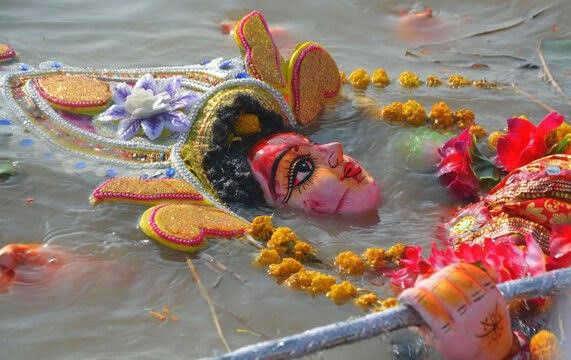
In order to safeguard these rivers, there is a collective responsibility. Scientific research gives technical solutions, but what is fundamentally required is a change in mindset. Devotion for real does not mean just rituals; it includes care, respect, and sustainable living. Adoption of eco-friendly idols, waste management, and effective treatment of sewage are measures that can help rivers remain healthy and people who rely on them safe.
The Ganga and the Yamuna are not mere bodies of water; they are veins of India’s heritage, tradition, and spirituality. They don’t just feed the land; they feed faith, livelihood, and traditions as well. As millions of people flock to celebrate Kumbh 2025, it is important to recall that saving these rivers is a worship in itself. Festivals must celebrate the Goddess and the river together, so that the Ganga remains pure and keeps flowing, sustaining life and religion for generations to come.
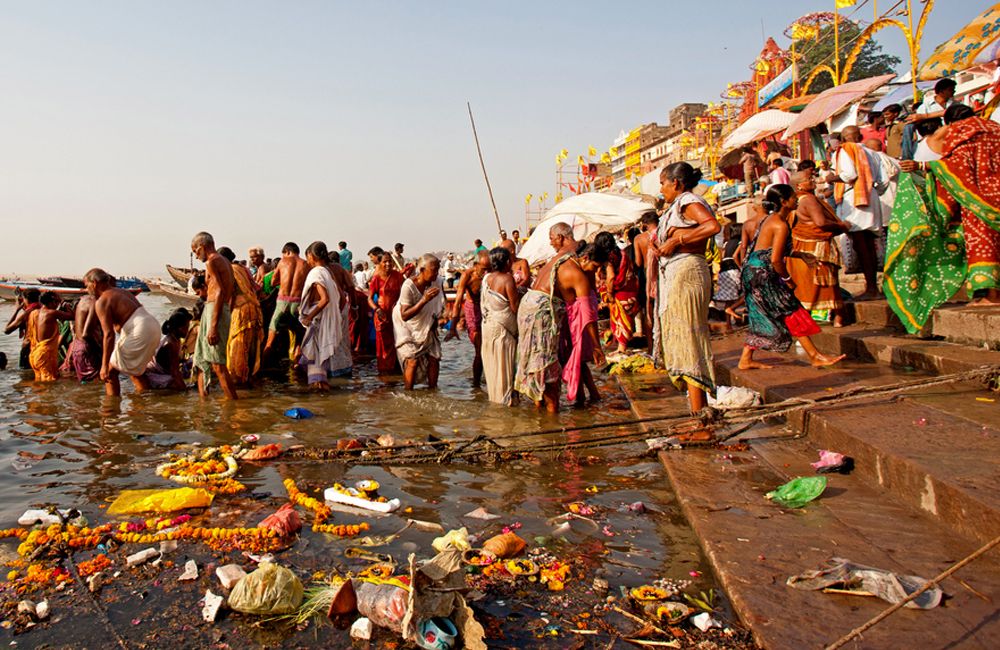
Ultimately, the tale of the Ganga is one of harmony. Festivals, rituals, and worship must be balanced with environmental sensitivity. When people submerge idols or bathe ritually, they must do so with sensitivity to their own impact. By embracing environmental-friendly practices, honouring nature’s resources, and minimizing pollution, humankind can make sure the Goddess comes back to a living, clean, and pulsating river a river worthy of devotion. That way, only then can religion truly symbolize care, compassion, and harmony with nature.
Pranjaly Manna is a media researcher and writer with a focus on society, culture, and communication. Her work explores how media shapes everyday life and public consciousness.