Divyansh Kabeer | 24th November 2025
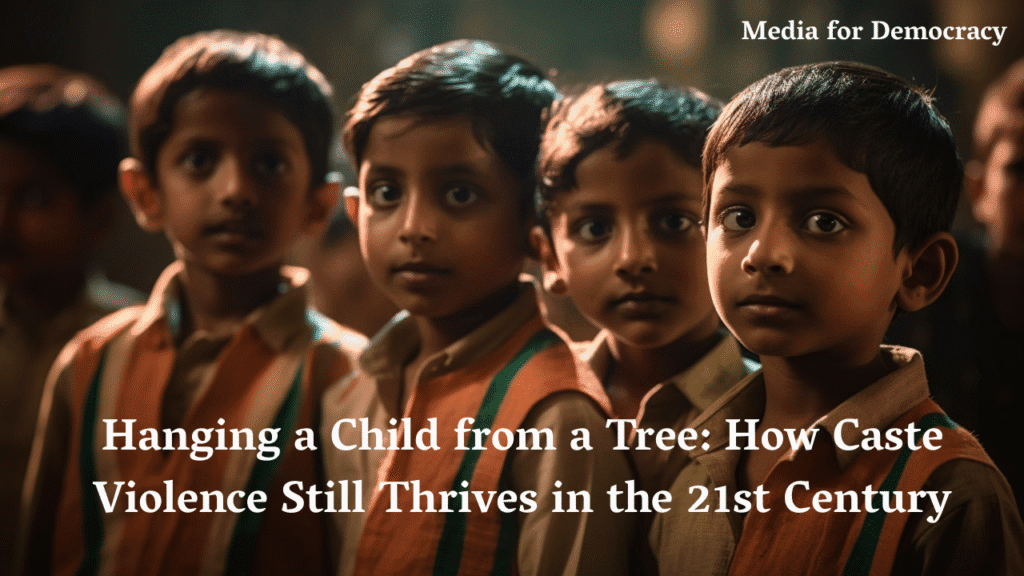
In the heart of Rajasthan’s Barmer district, in Bhakharpura village, an incident took place that forces us to confront an uncomfortable truth: that even in the 21st century—an age of technology, economic growth, and supposed social progress—India continues to look away from everyday caste violence. The brutal assault of an eight-year-old Dalit child, allegedly beaten and hung upside down from a tree simply for touching a water pot, is not just a crime. It is a reminder of a deeply rooted inequality many conveniently choose to ignore.
A Child Punished for Thirst
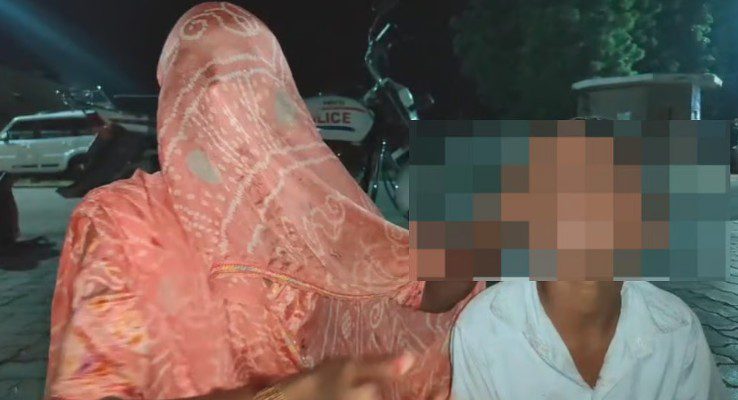
According to the police complaint, the young boy was playing when two men—Narnaram Prajapat and Demaram Prajapat—ordered him to clean a bathroom and collect garbage. He obeyed, perhaps because children in villages often assume that adults’ words must be followed. After completing the task, he asked for water. When he touched the accused’s pot, his family said the man erupted in anger.
What followed was barbaric. The child was taken to the house of one of the accused, tied upside down from a tree, and beaten mercilessly. His mother and grandmother—who rushed to save him—were also assaulted. The violence ended only when a relative began recording the torture on a mobile phone. The FIR, filed the next day, named three men: Narnaram, Demaram, and Ruparam Prajapat.
Police later arrested one and detained two others, booking them under the Bharatiya Nyaya Sanhita for grievous hurt, confinement, and kidnapping, along with the SC/ST (Prevention of Atrocities) Act. But the true horror lies beyond the legal charges: a child was tortured for touching drinking water. In 2025. In a country that sends missions to the moon.
The Issue: Caste Violence Wrapped in Silence
This incident is not an isolated case. It is part of a larger pattern of discrimination that still thrives in rural India. Dalit children are often the first targets because they are vulnerable, voiceless, and easy to intimidate. Many cases go unreported because families fear retaliation or know nothing will happen even if they complain.
What is worse is our collective silence. Stories like this appear in news cycles briefly and vanish the next day, buried under political drama and celebrity gossip. Society has almost normalized caste violence to the point where it shocks us for a moment but does not change our behavior.
In today’s time—the 21st century, an era of global connectivity and rapid modernization—these realities continue to exist, and many of us ignore them very conveniently. We speak loudly about development but remain silent about dignity.
Why Does This Still Happen?
There are several uncomfortable reasons:
1. Deep-rooted caste hierarchy: Centuries-old systems of purity and pollution still influence social behavior, especially around food and water.
2. Power imbalance in villages: Upper-caste groups often control land, resources, and local authority, while Dalit families are economically dependent.
3. Weak enforcement of laws: The SC/ST Act is strong on paper but poorly implemented due to social pressure, lack of sensitivity, and local biases.
4. Social invisibility: Violence against Dalits rarely becomes a national issue unless it is extremely spectacular or politically useful.
5. Lack of outrage: Society moves on quickly, choosing comfort over confronting injustice.
The Matter: A Crime Against a Child, a Crime Against Humanity
The Barmer case may involve a single eight-year-old boy, but its implications reach far beyond one incident. When a child is punished simply for touching a pot of water, the harm is not limited to the individual—it becomes an assault on the very principle of equality and a denial of the truth that all humans are born equal. This act of violence forces us to confront unsettling questions: What does “New India” stand for if such caste-based cruelty persists? Why does caste hatred continue to be handed down to children, shaping their worldview before they even understand it? And how long must Dalits remain vulnerable in the most ordinary public spaces—wells, pots, streets, and schools? This is not just a matter of law and order; it is a deep moral crisis that challenges the conscience of an entire nation.
Possible Solutions: What Needs to Change
To prevent such incidents, India needs more than arrests—it needs genuine social transformation rooted in justice, dignity, and awareness. Police must treat caste crimes with urgency, as delays only embolden perpetrators. At the community level, schools, panchayats, and local leaders should actively challenge and dismantle caste myths related to purity, labour, and access to basic resources like water. Dalit families who file complaints often face social boycotts, making state-backed protection and rehabilitation essential. The fact that a child was ordered to clean a bathroom highlights the continued presence of caste-based child labour; families must be educated and empowered to reject such exploitation. As a society, we must acknowledge that caste discrimination is not a relic of the past but a painful, persistent reality demanding open discussion. In today’s digital age, videos captured on mobile phones have become powerful tools for exposing injustice, and ensuring these recordings lead to swift legal consequences can significantly deter future caste-based crimes.
We Cannot Pretend Anymore
The Barmer incident is heartbreaking, but it is also a mirror. It shows us that while India proudly celebrates economic achievements, it still fails to protect its most vulnerable citizens. An eight-year-old boy hanging upside down from a tree is not just a rural tragedy—it is a national shame.We cannot call ourselves a modern society if children are beaten for touching water. We cannot claim to be in the 21st century if caste decides who deserves dignity. And we cannot move forward as a country until we confront the violence we prefer to ignore.
Real change will come only when every Indian acknowledges that caste discrimination exists—not in textbooks, but in everyday life—and decides to stand against it. Until then, more Dalit children will continue to suffer in silence, and we will continue to fail them.
Divyansh Kabeer is a Delhi-based writer who focuses on social justice, caste, and urban inequality. Through human-centered narratives, he highlights the invisible struggles of marginalized communities and their fight for dignity.