Rashi Akanksha | 7 November 2025
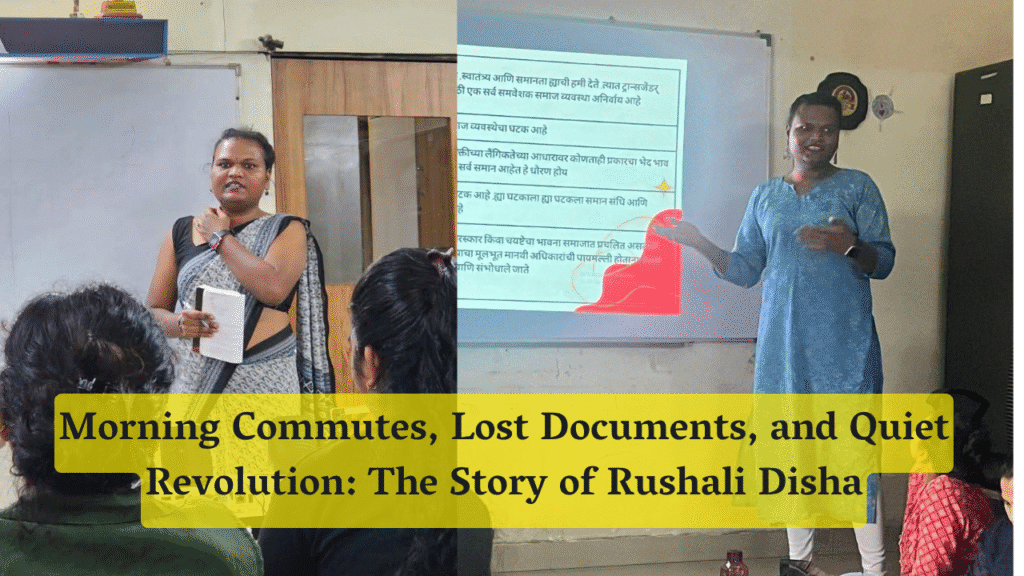
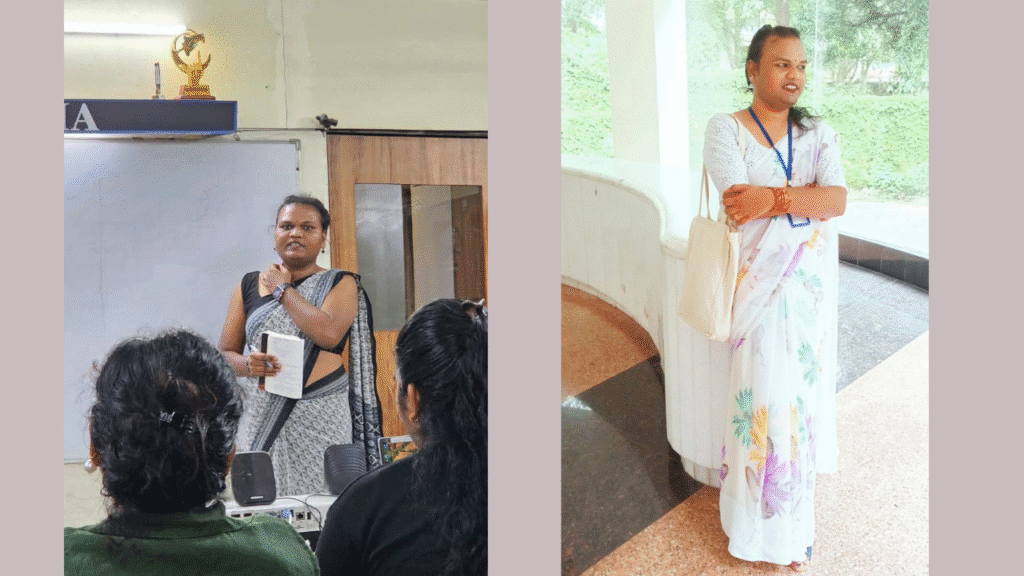
Like every other citizen of India, Rushali Disha dresses up in the morning and leaves for her job. She checks her bag, wraps her dupatta neatly, and steps into the city’s rhythm – the same trains, the same crowds, the same rush. But her journey is never quite the same. In the crowded compartments of Mumbai’s local trains, stares replace smiles. People shift uneasily, some whisper, some snicker, and sometimes, cruelly, they ask her to get down at the next station – simply because she is a trans woman. Yet, she stands, not just holding onto the metallic railings of the train, but holding up the idea of dignity itself. Rushali Disha is a development worker, activist, and advocate for trans rights, someone who moves through hostility with grace, and through prejudice with purpose.
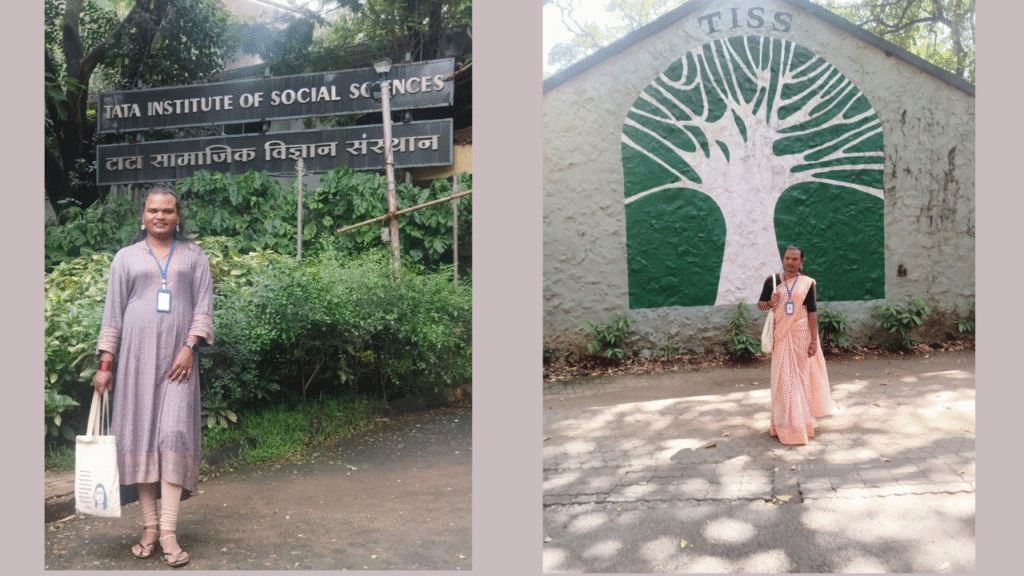
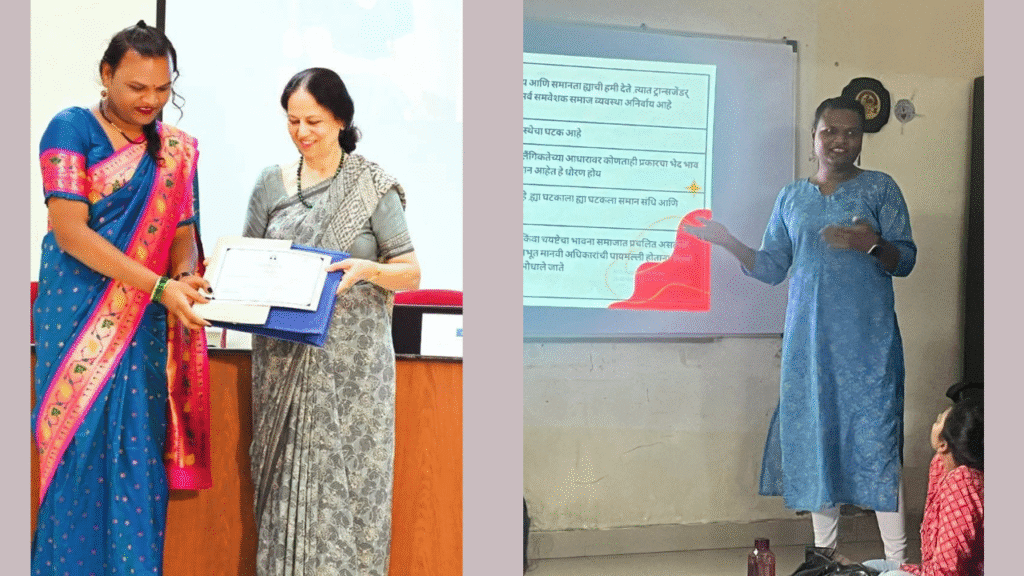
Rushali Disha is a Mumbai-based activist and development worker who focuses on LGBTQ+ inclusion, education access, and livelihood avenues for marginalized groups. She works across communities – trans, Dalit, Adivasi, Muslim and women’s collectives – building relationships by listening, learning, and organizing community-led interventions and surveys. Her practice mixes grassroots listening with advocacy, and it is shaped by lessons from her guru and the Hijra tradition she grew up with. Below are the excerpts from her interview:
Interview (Q & A)
Q: Tell us about your mornings — how does the city meet you?
A: Every morning I leave home like anyone else. But the commute is its own battleground. People stare; women sometimes look at me with disgust. “When the next station comes, get down from here,” one woman once told me. I keep going because I must, but those words linger. At times officials or kind passengers stand up for me, small gestures that matter, but the day begins with a test of dignity.
Q: How did you get into development work and activism?
A: My path into activism was personal. I started by talking, one table at a time, to people from different communities, Dalit, Adivasi, Muslim women, and realized our struggles intersect. Slowly, trust grows: conversations become companionship, isolation softens, and shared ideas form. My guru, Disha Pinky Shaikh, guided me early on; the Hijra traditions taught me to survive and to care. Those lessons turned into a commitment to bring people together and to make systems listen.
Q: You spoke about your education — how difficult was that journey?
A: Education was never easy for people like us. Many trans students are asked to leave home when they disclose their identity, when families expel them, they lose documents, school certificates, identity papers which block future study or jobs. I completed my education, but for many, higher-level education is a challenge. College hostels, scholarships, reservation systems, they are often not set up to include us. When someone who left home tries to enroll for a higher course, there are administrative hurdles that force them to wait a year or more. The real problem is that policy conversations about “trans education” rarely reach the primary and secondary levels where they would help most.
Q: How was your experience when you moved to Mumbai?
A: 8 years ago when I came to Mumbai, I couldn’t find a house. Landlords refused to rent to me. Where I finally found a place to stay, people harassed me, they would knock on my door repeatedly at night. My own flatmates used to tease me, people used to abuse my landlord for renting me the home. I felt unsafe, so I left. I told my guru about it; the social stigma is so strong that even people close to me were pressured.
Q: How does discrimination show itself in ordinary places like shops or markets?
A: It shows all the time. If I go to buy essentials like rice or pulses, shopkeepers sometimes refuse to sell, or they serve me only after I take a bunch of people with me to support me. In one shop, I was given different treatment, less change, smaller portions. For other people, the egg was priced at 6 rupees, but they used to charge me 8! These are small humiliations but they add up: denial of basic service, constant suspicion, and the message that you do not fully belong.
Q: Tell us about your guru and the role of the Hijra tradition in your life.
A: My guru, Disha Pinky Shaikh, is like a mother: she taught me resilience and the ethics of our community. She was my inspiration and my motivation. The Hijra gharana is often misunderstood, but within it there is care, training, and a way of living that values solidarity. Those teachings to survive, to protect each other, to use our voices became the backbone of my activism.
Q: What policy changes would make the biggest immediate difference?
A: First, make education inclusive at the primary and secondary levels: scholarships, trans-inclusive hostels, and reservation where needed. Second, simplify documentation processes so that people who have been expelled or who lost papers can get IDs quickly. Third, create real workplace inclusion, not token hires, but systems for safety, training and equal pay. Finally, accessible livelihood programs: skill training linked to guaranteed placements or apprenticeships so trans people are not pushed into survival economies.
Q: How do you cope with the emotional toll of daily hostility?
A: Community keeps me standing. My friends, chosen family, and the women in my gharana give strength. Small victories – a student getting through college, a sister finding a stable job, or a day without harassment on the train – keep me hopeful. I also try to rest and to pass on support: when one person climbs, they can help another.
Q: What do you want allies, institutions and the government to do differently?
A: Don’t offer sympathy; offer space and systems. Hire beyond a photo-op. Build hostels and scholarship programs that work in reality. Create quick ID pathways. Sensitize schools and police. And most importantly, include trans people in planning and implementation – let us design the programs that affect us.
Closing
Rushali’s life is stitched from ordinary routines and extraordinary persistence: the same morning rituals, the same local trains, and the same commitments that bind many to city life – but shadowed by exclusions most people never experience. She has lost a home, been denied services, been told to get off a train, and navigated paperwork that vanished when family ties broke. Yet through those fractures she has built community, learned from her guru, and now uses those lessons to open doors for others.
As Rushali says plainly when she urges reform: protection must be practical – documentation, education, jobs and safe spaces. Until then, every morning that she boards a train and keeps moving is itself an act of quiet revolution.
Rashi Akanksha is a media researcher and writer focusing on gender, sexuality, and social justice in India. Her work examines the gap between legal rights and lived realities, amplifying the voices of marginalized communities.